Pages

Showing posts with label Transportation News. Show all posts

Tuesday, 1 October 2013

Why a $2.2 million Bugatti Veyron is the best car deal on Earth

Ever since Henry Ford unveiled the Model T to the public 105 years ago today, the formula for success in the world's auto industry has been fairly simple: Build enough cars to keep the factory full, as efficiently as possible. And yet automakers find new ways to violate that dictate every year, paying tuition of billions of dollars in losses along the way. Thanks to a new report from Europe, we have some fresh insights into just how bad some of those lessons went — and how it makes a $2.2 million Bugatti Veyron the best new-car value on the planet.
In a recent report highlighted by The Economist, analysts at Sanford C. Bernstein looked at the top 10 European models that had produced the biggest losses for the parent company. Thanks to the European economy and business choices that often made political concerns as important as consumer tastes, the Bernstein analysts had a huge field to choose from; the smallest total in the list hit $1.6 billion.
By their reckoning, the Volkswagen Group has lost $2.2 billion on the hand-built, 16-cylinder Bugatti Veyron since its launch in 2003. But unlike all other vehicles, those losses came on sales of only 367 cars — meaning that despite charging a minimum of $2 million for each Veyron, VWhad taken an average loss of $6.2 million on every one.
Bugatti and VW executives have been frank in the past about the car not being a profit maker for VW. At its essence, Bugatti ownership has more in common with joining a global country club for billionaires than buying a mere car, and VW chairman Ferdinand Piech has kept Bugatti going as a way to give VW a calling card among the world's wealthiest consumers with custom interiors and 1,200-hp engines — even if it means losing a billion here and there.
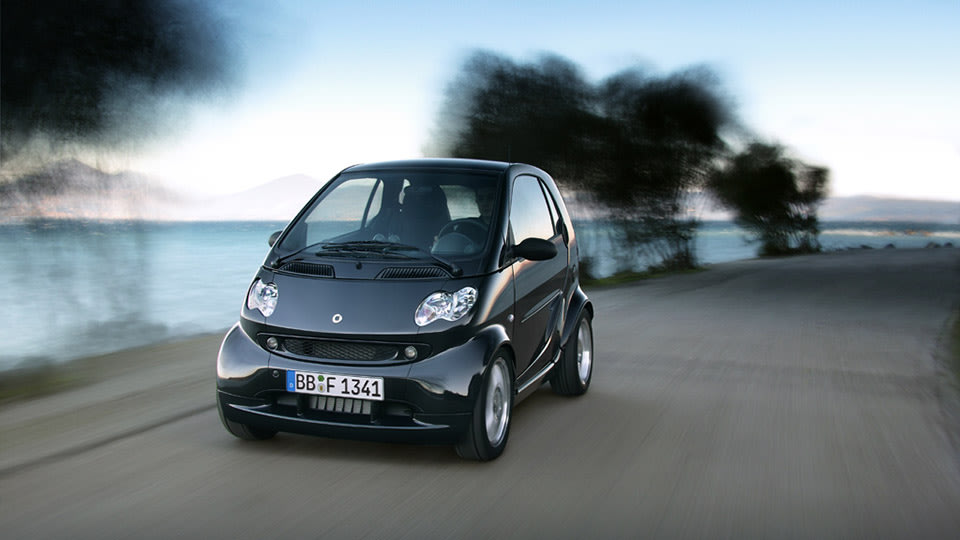
Despite those costs, the Veyron isn't the largest financial calamity created by an European automaker. VW's own Phaeton sedan, another Piech attempt to move VW upmarket, has lost $2.7 billion. And Berstein reckons no model has even failed worse than the first-generation Smart fortwo, a joint venture between Mercedes and the Swiss watch brand that fell wickedly short of sales expectations. Between a new factory, all-new models with no shared parts and new dealerships, Mercedes lost $4.5 billion on Smart between 1997 and 2003, a level of futility that may never be matched. Henry Ford would have known better.

10 cars Americans don't want to buy


In 2013, the average Acura TSX Sport Wagon spent close to half a year on the lot before being sold. This makes it the slowest-selling car in the United States.

Car site TrueCar provided 24/7 Wall St. with the average time a car spent on the lot before being sold through the first eight months of 2013. While the average days in inventory (DII) in the U.S. auto market in 2013 was just 62 days, each of these vehicles sat for well over 100 days on the dealer lot before it was sold. These are the cars Americans do not want to buy.

Days in inventory is widely considered to be a measure of the demand for a vehicle. Popular carsthat sell in the hundreds of thousands each year tend to leave the lot quickly. The models with high DII, on the other hand, tend to have extremely low sales. Five of these models have sold less than 5,000 units through the first eight months of this year. The Acura TSX Sport Wagon, the car with the longest DII, has sold just 1,491 vehicles in 2013.

Jesse Toprak, senior analyst for TrueCar, explained that the apparent low interest in these vehicles is because they are due for an upcoming design overhaul. “If your vehicle is towards the end of its product lifecycle, you typically see high days in inventory numbers for most of these models. Demand is low for them, and they’re effectively waiting for their replacement,” Topraksaid. This is the case for high DII models like the Volvo XC90 and the Acura MDX, Toprak added, the latter of which normally sells relatively fast.

A disproportionate number of these vehicles are SUVs. “This is because of seasonality,” explained Toprak. “A lot of customers wait until fall before they buy a lot of these four-wheel drive vehicles. We will see this [DII] number drop as we get into November and December.”

In some cases, vehicles spend a long time on the dealer’s lot because they are struggling to compete in a difficult market. Several of these vehicles are in the luxury segment, which is a particularly difficult market to compete in, Toprak noted. “It’s getting hardest to stand out in the luxury market. And the models that are the freshest, the redesigns, the new models, are the ones that get the attention.”

To identify the cars that Americans will not buy, 24/7 Wall St. reviewed days in inventory data formodels sold in the United States through August. Days in inventory measures the amount of time a car takes to sell from the first day the vehicle arrives at the dealer’s lot. We excluded the Ram Cargo Van because it is primarily a commercial vehicle. TrueCar also provided us with year-to-date U.S. sales. We reviewed car manufacturer’s suggested retail price (MSRP) and other model specifications from company websites.

These are the cars Americans do not want to buy

Click for galleryClick for gallery10. Volvo XC90
> Days in inventory: 119
> 2013 sales: 4,705
> Car type: SUV
> MSRP: $39,700

The XC90 is a mid-size seven-passenger SUV, the largest model in Volvo’s XC series. Volvo introduced the XC90 in 2002 and aims to begin production of the second generation in 2014. In the meantime, however, good safety scores are not giving the company the edge that it used to have. According to Edmunds.com, most XC90 rivals score just as well on safety tests and tend to offer more-appealing designs. Since the beginning of this year, only 4,705 units have been sold in the United States. This is down more than 27% from the year before.

Click for galleryClick for gallery9. Land Rover LR2
> Days in inventory: 119
> 2013 sales: 2,070
> Car type: SUV
> MSRP: $37,295

The 2013 LR2 received a less-than-favorable review from Edmunds.com, which recommended the model only for off-road driving. By comparison, its on-road performance was judged to be disappointing, partly because of Land Rover’s efforts to create a vehicle suited for both off- and on-road driving. Kelley Blue Book likewise noted the car was best suited for off-road driving. On average, the LR2 spent 119 days on dealers’ lots before being sold. This may be partially due to low production volume. Since the beginning of this year, only 2,070 LR2 cars have been sold.

8. Nissan Maxima
> Days in inventory: 125
> 2013 sales: 31,479
> Car type: Sedan
> MSRP: $31,000

The Nissan Maxima scores fairly well in some categories, but it is rated below average in overall mechanical quality and in fuel economy, according to J.D. Power. Another reviewer, Edmunds.com, notes the Maxima was competitive in the 1990s, but that the current model may be too expensive. TheNissan Maxima carries a price-tag similar to many luxury sedans, but without the high-end brand name. Nissan sold more than 31,000 Maximas since the beginning of this year, well below last year’s pace of 40,000 units through August.

7. Nissan Murano
> Days in inventory: 127
> 2013 sales: 28,299
> Car type: SUV
> MSRP: $28,440

When the Nissan Murano debuted for the 2003 model year, it was one of the first mid-size crossovers launched in the nation. Nissan introduced a second generation in 2009. Still, the Murano is less competitive today than it was a decade ago. It is still rated well for performance and style by Edmunds.com, but the 2013 model suffers from poor fuel economy and rearward blind spots. Nissan sold some 28,300 Muranos in 2013 through August. On average, a Murano remained on the dealer’s lot more than four months before it was sold. Further, sales of the Murano have declined more than 20% year-over-year through the first eight months of 2013.

6. Acura MDX
> Days in inventory: 132
> 2013 sales: 30,264
> Car type: SUV
> MSRP: $42,290


The Acura MDX is a luxury crossover SUV with a starting price of more than $42,000. At the time of its release for the 2001 model year, the MDX was considered a relative latecomer to the SUV market, according to Edmunds.com. The most recent redesign of the MDX has earned rave reviews, with Consumer Reports giving it a “recommended” rating and Edmunds.com giving it an “A.” However, year-to-date sales for the MDX remain down 11%. Acura recently initiated a new sales push to better-tailor cars for the American consumer. As one executive told Bloomberg, Acura struggles with being “known as a value company” among luxury car brands.

5. Infiniti EX
> Days in inventory: 137
> 2013 sales: 1,189
> Car type: SUV
> MSRP: $36,900 

Reviewers at Kelley Blue Book and Edmunds.com say that the Infiniti EX offers a sporty driving experience for a crossover SUV, yet less space for passengers and cargo. The current model does not appear to have much traction with consumers. Only 1,189 units of the model have been sold this year through August, almost half of the sales during the same period last year. While crossover SUVs have become increasingly popular, does not seem to have benefited the Infiniti EX, recently renamed the QX50.

4. Acura ILX
> Days in inventory: 142
> 2013 sales: 13,907
> Car type: Sedan
> MSRP: $26,900

The Acura ILX received praise from Consumer Reports for its various high-end features, including a multi-angle rear camera and noise cancellation. But, according to Edmunds.com, there are as good or better compact luxury sedans available for the same price. Additionally, the ILX is only offered as a four-door sedan, and automatic transmission is not an option, factors that might make the car a tougher sell. Despite these criticisms, the long average time the car spend on dealers’ lots and last year’s recall of the 2013 Acura ILX, sales actually have soared. Through August, nearly 14,000 units have been sold in 2013, up from just over 4,000 in the first eight months of 2012.

3. Mitsubishi Lancer
> Days in inventory: 143
> 2013 sales: 14,330
> Car type: Sedan
> MSRP: $15,995

The Mitsubishi Lancer was introduced in 1973. Since that time, the Lancer has been sold under a variety of names, such as the Mirage, Eagle Summit and Colt. The original Lancer suffered from poor reviews, with Edmunds.com describing it as underpowered and dull. Although Mitsubishi improved some of these features in later generations, the current Lancer model still trails considerably behind competitors in fuel economy and interior quality, according to reviews. This may be due to Mitsubishi leaving its compact sedan models largely unchanged for several years.

2. Volvo C30
> Days in inventory: 146
> 2013 sales: 1,190
> Car type: Hatchback
> MSRP: $25,500

The Volvo C30 hatchback has largely failed to catch on in the United States. Volvo decided in 2012 to kill off the model, making the 2013 C30 its final version. The model has failed to sell well during its final year. Volvo has barely sold more than 1,000 C30s this year through August, down nearly 40% from the first eight months of 2012. The winding down of the model reflects a broader trend in Volvo’s operations, according to Car and Driver, as the company looks to shed a number of its models to focus on its more profitable vehicles.

1. Acura TSX Sport Wagon
> Days in inventory: 158
> 2013 sales: 1,491
> Car type: Sport Wagon
> MSRP: $31,860

The TSX Sport Wagon spends the most time on car dealer’s lots of any car model. Acura sold fewer than 1,500 units this year. For overall performance and design, J.D. Power rated the 2013 TSX Sport Wagon below average. Edmunds.com’s review says the Sport Wagon is a viable choice among sporty luxury cars, but that it has not kept up with the performance offered by some of its competitors. Additionally, with the newer Acura ILX now available, the TSX — offered as either a sedan or a station wagon — is no longer the entry-level model for Acura. The Sport Wagon version of the TSX is relatively new, introduced in 2011.


More at 24/7 Wall St.

America's Poorest States
The World's Largest Automakers
States That Drink the Most Beer

Tuesday, 17 September 2013

How to make a normal car sound like a Ferrari

Can't afford a Ferrari? Well, Faurecia SA,  the French auto parts maker, has what might be the next best thing: A system that makes your car sound like one.

Faurecia is offering car makers a mini loudspeakerthat can amp up the muffled sound of a small engine's exhaust so it has the roar of a supercar's.

That's perhaps not good news for the neighbors but a possible boon for drivers aching for the head-turning noise of a Ferrari without spending $250,000 to get it.

Faurecia is showing its loudspeaker at this week's Frankfurt auto show. The unit of France's PSA Peugeot Citroën group has recognized that tougher emissions-control legislation is making cars quieter due to the extra technology required inside the "hot" end of the exhaust system to reduce CO2 emissions and pollution like particulates. Modern cars with diesel engines generate more noise from the engine itself than from the tail pipe.

Engines are also getting smaller as manufacturers try to cut fuel consumption without sacrificing power, a trick they pull off by using exhaust gases to help drive the engine through turbochargers. That can give three- and four-cylinder engines the sort of oomph but not the noise once associated with bigger engines. The throaty roar of a V-8 that some particularly in North America would say is the sound of automotive freedom is disappearing.

"There's a lot of interest from North American manufacturers," said Peter Lakin, head of sales, marketing and programs at Faurecia Emissions Control Technologies. German auto makers have also shown interest, Mr. Lakin said.

Faurecia's system uses sophisticated software that captures what a car's engine is doing to drive a loudspeaker contained in the muffler, whose only role normally is to reduce sound.

Through the loud speaker, Faurecia's system that will be preinstalled at the factory will also allow drivers to select from a few different exhaust sounds ranging from quiet to sporty.

The system also uses its software to strip out annoying ambient sounds, like the whine of the turbocharger, by using active noise control technology to cancel out the unwanted noise, similar to noise-cancelling headphones. The noise signal frequency picked up by a microphone in the muffler is slightly modified and played back over the loudspeaker so that the original sound isn't audible.

Automotive tuneup stores selling noise-generating systems already exist but they play different engine or exhaust sounds over the speakers inside the cabin, giving drivers the impression that they're driving a souped-up Lamborghini. There's no such sound outside the car.

A key component of the system is the loudspeaker that will nest inside the muffler and will be "hardened" so that it will last the life of the car.

Mr. Lakin says the additional cost won't be all that significant, as the dynamic sound systemreplaces much of the muffler. "In future, we could even get rid of the muffler altogether and just use a speaker."

Faurecia makes exhaust systems for most if the world's automotive groups, including Italian supercar builders Ferrari and Maserati, who have teams of engineers tuning their cars' engine sounds and acoustics.

Will supercar makers that spend millions getting exactly the right sound from the tail pipes of their V8-engined sports cars object to more humble vehicles making the same noise from a computer chip?

"I don't think you can patent a sound. They may be upset about it, but I don't think they could stop us from doing it," Mr. Lakin said.

Wednesday, 11 September 2013

Top 5 most fun cars to drive under $35,000

You can’t beat fun for a good time. And you can’t beat a really fun car for less than $35,000. No matter how fun your Ferrari 458 Italia is, no matter how great your Lamborghini Aventador makes you feel, anyone who is larking about with a $27,000 grin-mobile can look at you and say: “I bought this with what it costs you to service your brakes.”
At least that’s what I’d say.
So with that in mind, here’s our list of top five fun cars under $35,000. (Why $35,000? It just seemed like a sensible number that had at least five cars that make me smile).
Fiat 500 Abarth: When Fiat left America in 1983, no-one thought they would come back with a charming, well-engineered, and (so far) reliable car like the 500. And certainly no-one guessed that they’d offer a wheel-smoking Abarth performance version. This is why small cars are fun. And, oh yeah, there’s that girl in the ad.
Subaru WRX STI and Mitsubishi Lancer Evolution X: Despite being bitter rivals for years, battling it out in the World Rally Championship, these are really the same car. And they’re both ludicrous. Want to feel like ten times the driver you really are? These are your vehicles.
Volkswagen GTI: Since 1983, the GTI has been putting smiles on the faces of American drivers. And it has always been an absolute blast to drive. Think front-wheel-drive isn’t for enthusiasts? Think again. This latest GTI is maybe the best ever. How great is this car? I just bought one. No really, I just went out and bought one.
Ford Mustang 5.0: This is the culmination of everything that’s good about muscle cars. You just wanna break the law. It’ll drift, it’ll burnout, it may get you a girl. What’s not to like? OK, everybody’s got one. But don’t let that stop you.
Scion FR-S (and Subaru BR-Z): God bless Toyota. They built the “Hachi” – the mid-eighties Toyota Corolla GTS AE86 – and now they’ve gone and built it again. It’s underpowered (but upgradeable…) but so, so, so much fun. Balanced, poised, and as much fun as spiking the punch at the retirement home. Pure gold.
In a way, this is a nonsensical list. Why would you drive a car that isn’t fun to drive? That’s like eating things that don’t taste good. Or dating people you’re not attracted to.